

What You Need to Know Before You Buy Your Next RV – Weights & Towing
Pros
-
This article explains towing terms like ATM, GCM, and tow ball weight so buyers can understand what to look for when comparing caravans.
-
It gives a simple 3-step process for matching a caravan’s weight to your vehicle’s towing capacity.
-
It stresses the importance of checking your vehicle’s compliance plate and caravan specs before buying, helping buyers avoid costly mistakes.
Cons
-
Buyers might overlook how quickly weight adds up when you load gear, water, and accessories into the caravan.
-
The legal towing capacity of your vehicle isn’t just about engine power, buyers need to think about suspension, brakes, and payload too.
-
Different states have slightly different towing laws, which could catch new buyers out if they don’t double-check local requirements.

Caravan Towing Capacity: What You Need to Know Before You Buy Your Next Caravan!
When it comes to purchasing a new caravan in Australia, one of the most crucial, and often confusing considerations is, your vehicle’s legal towing capacity. Whether you’re a first-time buyer or upgrading your setup, understanding towing weights, legal limits, and compliance is essential for safety, insurance, and peace of mind on the road.
Here’s what you need to know before you hitch up and hit the highway.
What is Towing Capacity?
Towing capacity is the maximum weight your vehicle can legally and safely tow. It’s set by the vehicle manufacturer and takes into account a range of factors including engine power, braking system, chassis strength, and axle load.
There are two key towing capacity ratings:
Braked Towing Capacity: The maximum weight your vehicle can tow if the trailer has its own braking system (common for most caravans).
Unbraked Towing Capacity: The maximum weight your vehicle can tow without trailer brakes (typically up to 750 kg in Australia).
Key Terms You Need to Understand
To make an informed purchase, it’s important to know these common towing terms and understand their meanings:
ATM (Aggregate Trailer Mass): The total weight of the caravan when fully loaded, including water, gas, gear and accessories.
TARE Mass: The weight of the empty caravan as it leaves the factory (includes standard fittings, but no gear or fluids).
GVM (Gross Vehicle Mass): The maximum your towing vehicle can weigh when fully loaded.
GCM (Gross Combination Mass): The maximum combined weight of your tow vehicle and caravan when both are fully loaded.
Tow Ball Weight (TBW): The weight the caravan places on the tow ball, generally 8-12% of the ATM.
Why Matching Towing Capacity Matters
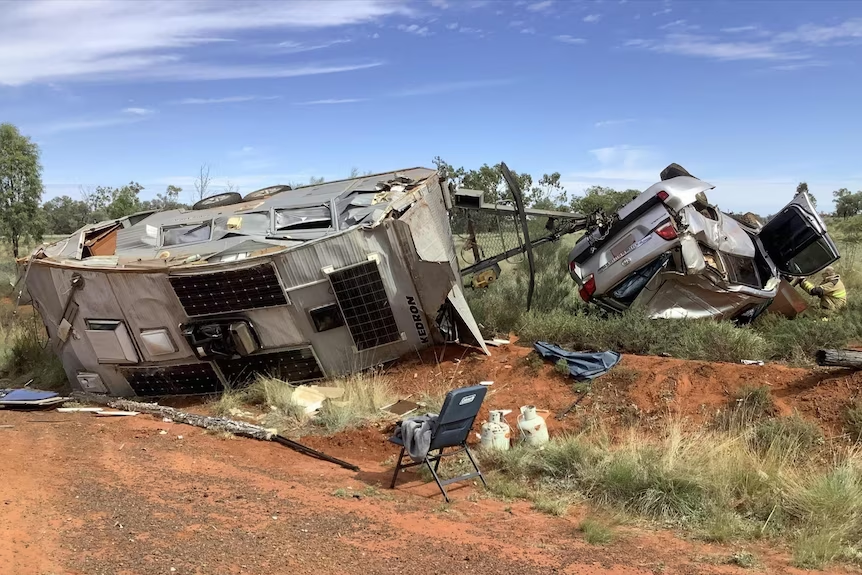
Exceeding your towing limits can result in:
Illegal towing
Risking fines, insurance issues, and liability in the event of an accident.
Increased wear and damage to your vehicle’s transmission, brakes, and suspension.
Compromised safety
Particularly in emergency braking and high-speed manoeuvring.
Always check your vehicle’s compliance plate or owner’s manual and compare it with the caravan’s specifications before purchasing.
Australian Road Rules & Legal Requirements
In Australia, towing regulations are enforced at both federal and state levels. Here’s what you must comply with:
- Drivers must hold a full driver’s licence.
- Caravan brakes are legally required for trailers over 750 kg.
- Safety chains are compulsory, caravans up to 2.5 tonnes need one chain, above that require two.
- Extended towing mirrors are mandatory if your caravan is wider than your vehicle.
- Load levelling systems may be required for heavier vans to reduce sway and improve control.
Each state may have slight variations – always check with your state or territory’s road authority before departure.
How to Choose the Right Caravan for Your Vehicle
Here’s a simple 3-step process:
- Check your vehicle’s towing capacity (braked and GCM).
- Look for caravans with an ATM well under your vehicle’s limits, leaving room for gear, water, and modifications.
- Consider your tow ball weight, ensure your vehicle’s tow bar is rated to handle the load.
Top tip: When in doubt, weigh your loaded caravan and vehicle at a public weighbridge before hitting the road.
Popular Towing Vehicles in Australia
Some of the top-rated vehicles for towing caravans include:
- Toyota LandCruiser 300 Series
- Ford Ranger
- Isuzu D-MAX
- Nissan Patrol
- RAM 1500
- Chevrolet Silverado
Each offers braked towing capacities between 3,000 kg and 4,500 kg, but remember, it’s not just about power. Suspension, braking, and payload all come into play. So when you are deciding on the right car and caravan combination for your needs, you need to be looking at the whole picture.
Towing Safety Tips
- Always distribute weight evenly throughout the van.
- Secure heavy items low and over the axle.
- Use weight distribution hitches if needed.
- Get regular servicing for your brakes, tyres, and suspension.
- Practice reversing and manoeuvring in a safe, open space.
Before you sign on the dotted line for your next caravan, take the time to understand your tow vehicle’s limits and your legal responsibilities. It could mean the difference between smooth touring and a towing disaster. If you’re unsure, always consult with the car and caravan dealership, caravan manufacturer, or a licensed weighbridge operator.
Don’t forget to explore RV Finder to compare towing specs, weights, and suitability across Australia’s leading caravan brands, so you can tow with confidence, every time.
For state-specific towing regulations visit the websites below.
State & Territory Towing Regulations
-
New South Wales (NSW):
Towing a trailer or caravan – NSW Governmentlegislation.wa.gov.au+8nsw.gov.au+8qld.gov.au+8 -
Victoria (VIC):
Register a trailer or caravan – VicRoadsvicroads.vic.gov.au -
Queensland (QLD):
Towing vehicles and trailers – Queensland Governmentwa.gov.au+5qld.gov.au+5qld.gov.au+5 -
Western Australia (WA):
Towing – Road Safety Commissionwa.gov.au -
South Australia (SA):
Light vehicle towing and trailer regulations – SA.GOV.AUtmr.qld.gov.au+3sa.gov.au+3sa.gov.au+3 -
Tasmania (TAS):
Tasmanian Road Rules Handbook – Transport Servicestransport.tas.gov.au -
Northern Territory (NT):
Towing and A-frames – NT Governmentnt.gov.au -
Australian Capital Territory (ACT):
Road rules – Access Canberraaccesscanberra.act.gov.au





405 days ago