

Why has there been a sudden increase in Caravan Rollovers in Australia?
Pros
1. Safer Travel
Knowing the causes of rollovers helps you make better decisions on the road, keeping your family, rig, and other drivers safer.
2. Equipment Awareness
Learning what safety gear (like DO35 hitches or ESC) can reduce risks gives you confidence in how to invest in and set up your caravan.
3. Real-Life Lessons
Reading about others’ experiences helps you avoid the same mistakes and prepares you for what to do in unexpected situations.
Cons
1. Financial and Emotional Cost
Rollover accidents often result in serious damage to caravans and tow vehicles, not to mention the stress and trauma that follows.
2. Increased Insurance and Regulatory Scrutiny
A rise in rollovers may lead to higher insurance premiums or tighter road laws affecting all caravanners, including safe ones.
3. False Sense of Security
Without the right knowledge, some drivers underestimate the risks, thinking it won’t happen to them until it’s too late.

Why the Sudden Increase in Caravan Rollovers in Australia?
Australia is experiencing a significant uptick in caravan rollovers, raising concerns among road safety experts and the caravanning community. This surge is attributed to a combination of factors, including increased caravan ownership, driver inexperience, and inadequate safety measures.
The COVID-19 pandemic spurred a domestic travel renaissance, leading to a 21% increase in caravan and campervan registrations from 2019 to 2023. With international borders closed, many Australians turned to caravanning as a safe and flexible travel option. However, this rapid growth has outpaced the dissemination of essential towing knowledge and safety practices.
Contributing Factors to Rollovers
- Driver Inexperience
Many new caravan owners lack the necessary experience and training for safe towing. Unlike other heavy vehicles, towing a caravan doesn’t require a special license in Australia. This gap in regulation means drivers may not fully understand the complexities of towing, such as managing sway, braking distances, and handling in adverse conditions. - Improper Loading and Weight Distribution
Overloading and uneven weight distribution are common issues leading to instability. An unbalanced caravan can cause the towing vehicle to oversteer, increasing the risk of rollovers, especially during sudden manoeuvres or in high winds. - Vehicle and Equipment Mismatch
Towing a caravan that exceeds the vehicle’s capacity or using incompatible equipment can compromise safety. Issues such as worn tires, faulty brakes, and mismatched tow gear have been identified as contributing factors in accidents. - Challenging Road Conditions
Australia’s diverse terrain presents unique challenges for caravanners. Narrow roads, limited overtaking lanes, and uneven surfaces can exacerbate the difficulties of towing, particularly for inexperienced drivers.
Safety Measures to Improve Towing Stability
There are several proactive steps that drivers can take to reduce the risk of a caravan rollover:
- Use a Quality Hitch System: Investing in a high-performance hitch such as the DO35 can drastically improve articulation and towing stability, particularly on uneven terrain.
- Weight Distribution Hitches: These help to evenly spread the load across the axles of both the tow vehicle and the caravan, reducing sway.
- Install Electronic Stability Control (ESC): ESC systems detect dangerous sway and automatically apply the brakes to bring the rig back into line.
- Cruisemaster Suspension: Independent trailing arm suspension systems, like those from Cruisemaster, can offer increased control and comfort on rough roads.
- Correct Tyre Pressure and Load Ratings: Always check that tyres are inflated correctly and suitable for the load they are carrying.
- Regular Maintenance and Pre-Trip Checks: Brake systems, bearings, coupling mechanisms, and lights should all be thoroughly inspected before any trip.
Taking these steps seriously can be the difference between a smooth trip and a serious accident.
Real Life Experiences
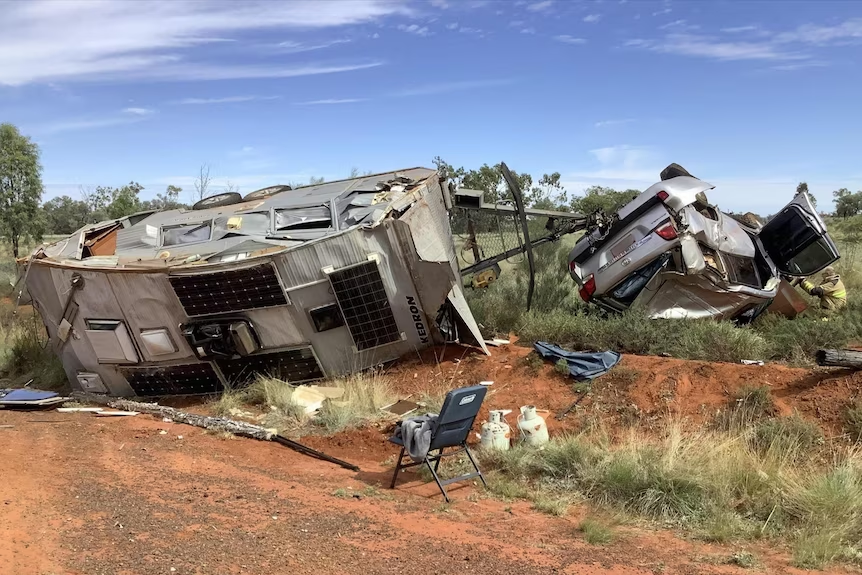
Recent accidents underscore the severity of the issue. For instance, a Victorian couple experienced a rollover just 50km from home after a 5,000km journey. They attributed the accident to a sudden change in road surface, causing the caravan to sway uncontrollably.
Another notable incident involved Ian and Debbie, who were towing their Zone RV Base caravan along the remote Tanami Track in the Northern Territory. A high-speed near-miss with another vehicle caused their caravan to roll onto its side. Remarkably, thanks to the caravan’s robust construction, including its Cruisemaster suspension and DO35 hitch, they emerged unscathed and were able to continue their journey. Their experience highlights the importance of both driver preparedness and the structural integrity of the caravan itself.
Calls for Improved Safety Measures
Experts and industry bodies are advocating for enhanced safety protocols:
- Mandatory Towing Training: Introducing compulsory towing courses to educate drivers on safe practices.
- Stricter Regulations: Implementing regulations to ensure proper vehicle and equipment standards.
- Public Awareness Campaigns: Raising awareness about the importance of proper loading, maintenance, and driving techniques.
The Caravan Industry Association of Australia has called for subsidised towing courses and a National Safe Towing Campaign to address these concerns.
The rise in caravan rollovers in Australia is a multifaceted issue stemming from increased popularity, insufficient driver training, and inadequate safety measures. Addressing these challenges requires a concerted effort from both authorities and the caravanning community to implement comprehensive training, enforce regulations, and promote awareness. With the right knowledge and equipment, caravan travel can remain one of the safest and most rewarding ways to explore Australia.






405 days ago